LIGO Laboratory / LIGO Scientific Collaboration 
California Institute of Technology
LIGO Project – MS 18-34
1200 E. California Blvd.
asadena, CA 91125
Phone (626) 395-2129
Fax (626) 304-9834
E-mail: [email protected]
|
a
|
Massachusetts Institute of Technology
LIGO Project – NW22-295
185 Albany St
Cambridge, MA 02139
Phone (617) 253-4824
Fax (617) 253-7014
E-mail: [email protected]
|
LIGO Hanford Observatory
P.O. Box 159
Richland WA 99352
Phone 509-372-8106
Fax 509-372-8137
|
|
LIGO Livingston Observatory
P.O. Box 940
Livingston, LA 70754
Phone 225-686-3100
Fax 225-686-7189
|
Distribution of this document: LIGO Scientific Collaboration This is an internal working note of the LIGO Laboratory. http://www.ligo.caltech.edu/
1 Introduction
The purpose of this document is to outline the strengths and weaknesses of using a methanol drag wipe vs first contact for cleaning optics. Liyuan Zhang’s CASI scatterometer was used to take raster scans of BRDF at 10 degrees from specular beam, with 1mm beam and step size. In Fig.1-6 a two-sided AR coated optic, 6’’ in diameter was used for testing. It was drag wiped and cleaned with first contact several times. In Fig. 7-8 measurements were taken of a 3’’ in diameter HR coated optic cleaned with First Contact (FC) only. Using these BRDF measurements, maps of the optic’s scatter and average scatter values were obtained, which is shown in Fig.1-Fig.8.
Relevant Documents:
LIGO doc # T0900402 Enhanced LIGO drag wiping procedure for large optics
LIGO doc# E1000079 Advanced LIGO First Contact procedure for large optics
LIGO doc# T1000162 Full list of 6’’ optic CASI scans done at Caltech
2 Drag wiping tests
Two different ways of drag wiping were tested, using first old methanol and then new gradient grade methanol. It has been observed at LHO many times in the past that the older methanol gets, the more residue it leaves on optics. The Enhanced LIGO procedure for drag wiping large optics, LIGO #T0900402, was followed in the tests listed below. In this document “old” methanol refers to methanol that has been sitting around the lab in plastic squeeze bottles and “new” methanol refers to Chromosolv gradient grade methanol, opened just prior to testing.
2.1 Old methanol
The following scans show the scatter from the first attempts to drag wipe with old methanol. It is evident in this scan that the drag wipe leaves a significant amount of residue behind on an otherwise clean optic. Fig. 1 is a surface map of the optic prior to any cleaning, and Figure 2 is the same surface after a drag wipe using old methanol.
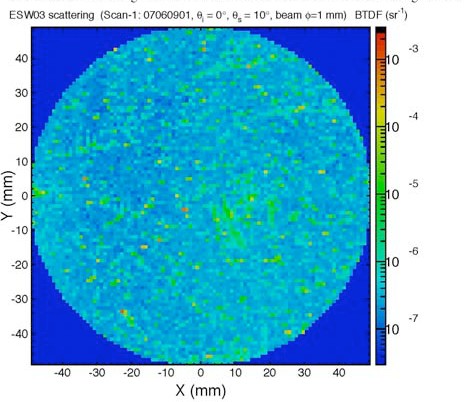
Figure 1: 2.05 ppm average BRDF on optic before cleaning
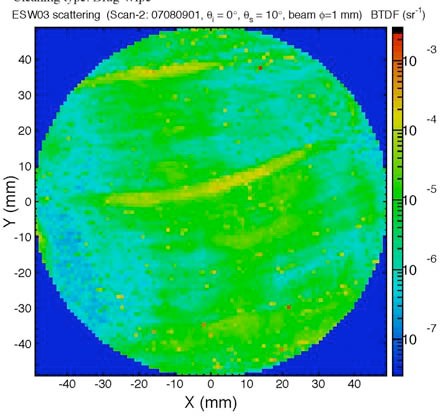
Figure 2: 10.7 ppm average BRDF on optic after old methanol drag wipe
3 First Contact
After the drag wipe cleaning in Fig. 2, the optic was cleaned with First Contact to see if it would get rid of the methanol residue. Figure 3 is the result of cleaning with First Contact.
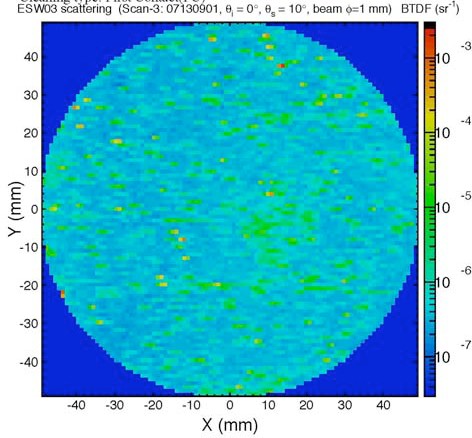
Figure 3: 2.41 ppm average BRDF after cleaning with first contact
Not only did cleaning with First Contact leave no residue, it also removed nearly all the residue left by the methanol. The developer and manufacturer of FC, Photonic Cleaning Technologies, states that FC was developed to get optics cleaner than is possible with drag wiping, which is what is shown here in the first three CASI scans. There are 26 CASI scans total done on this particular optic, see LIGO #T1000162 for pdf of all of them.
4 New Methanol
The tests in this section were on the same 6’’ optic as Fig.1-3, this time the optic was completely submerged in a methanol bath, first using old methanol (Fig.3) and then using new methanol (Fig. 4).
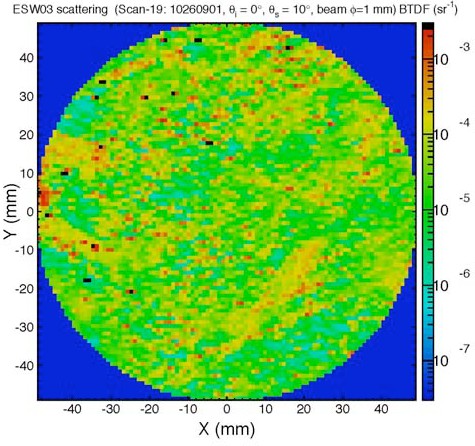
Figure 4: 109 ppm average BRDF. Cleaned by submerging optic in a bath of old methanol
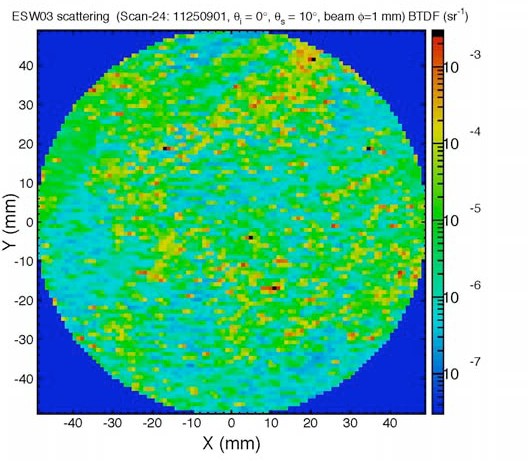
Figure 5: 35 ppm average BRDF. Cleaned by submerging in a bath of new methanol.
There were other cleanings done in between these two scans, however bathing the optic in new methanol does lower the average BRDF of the optic. It seems to removes some of the residue left by the old methanol but it is unclear from this test what it would leave on a cleaner optic.
5 New Methanol Drag Wipe
The next scan shows a 3’’ optic after it has been cleaned with clear first contact and PEEK mesh. This is a different optic than the one in the previous tests.
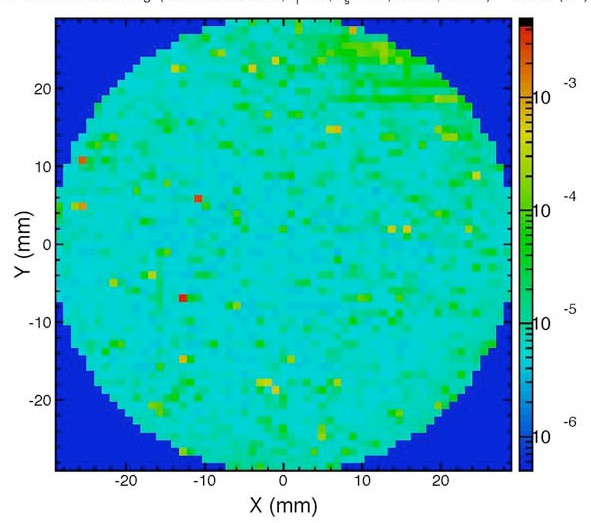
Figure 6: optic cleaned with clear first contact and peek mesh. 1.81E-5 ppm average BRDF.
This optic was then drag wiped according to the Enhanced LIGO drag wiping procedure, using clean spectroscopic grade methanol. Cheryl Vorvick assisted with the drag wiping. Each surface was drag wiped at least 3 times, vertically and horizontally.
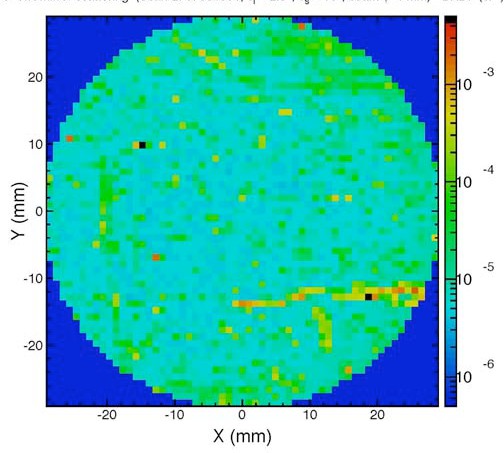
Figure 7: average BRDF is 3.44E-5, optic cleaned with a methanol drag wipe.
Fig. 7 represents the best case drag wipe result. While better than the other methanol cleanings, it still does not perform as well as first contact.
6 First Contact and Methanol
Methanol is commonly used at LIGO to drag wipe optics. Methanol dissolves dried FC very quickly. However, it also seems to mix with the First Contact solvent to create residue. Drag wiping an optic with methanol that has some FC on it can result in residue on the optic's surface that is difficult to get off. This would only become a problem if a large amount of FC is accidentally left on the optic’s surface and then spread around when drag wiping. In Figure 6 the surface map shows bits of dried First Contact on the top, right side and bottom that were left on the surface on purpose to see if drag wiping removed them.
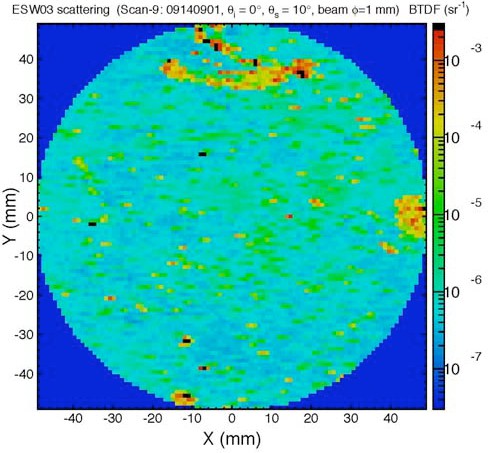
Figure 3: 47.5 ppm average BRDF after a messy FC removal
To see if it was the interaction between the methanol and the first contact that was causing the residue, the optic was submerged in a methanol bath for ten minutes with the dried first contact still on the surface. If the residue following this methanol bath and first contact cleaning, shown in Figure 5, was solely made up of first contact, it would have recombined with the new layer of first contact when it was applied and left the surface clean. This was not the case, which indicates that the methanol mixed with the first contact to create the residue in Fig. 7. Note: In these tests the FC was dissolved into the methanol on purpose to test the results, in practice it is fairly easy to tell when there is dried FC left on the surface that needs to be removed.
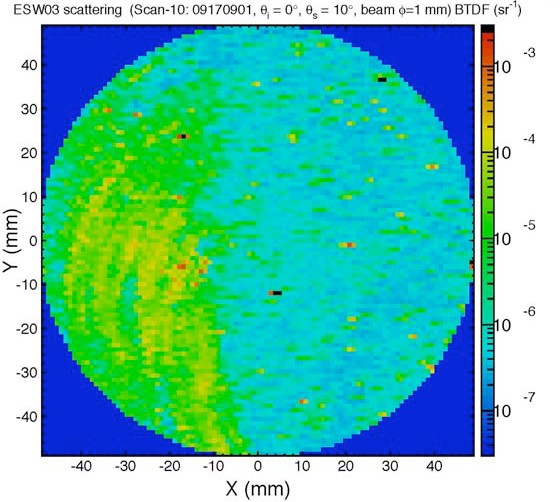
Figure 4: 25.6 ppm average BRDF on optic after cleaning in a methanol bath followed by a drag wipe AND a first contact cleaning.
For the next six cleanings the optic was dragwiped with new methanol and then first contact was applied. Figure 6 is the result of those six cleanings, the scatter has improved but the residue is still visible on the left side.
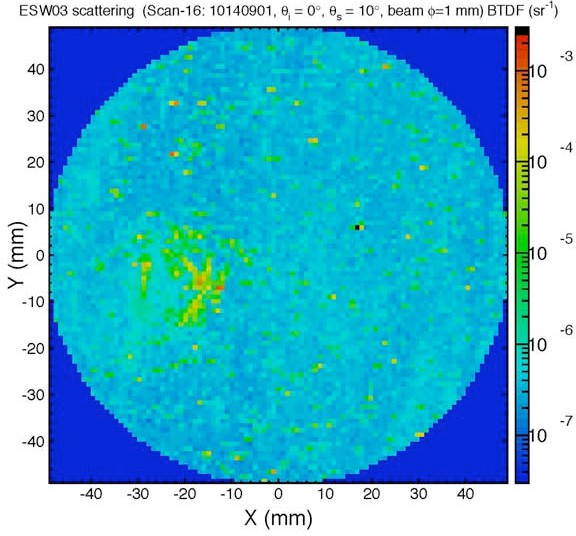
Figure 5: 6.76 ppm average BRDF. After six consecutive cleanings (drag wiping followed by first contact every time), the residue is lessened but not gone.
7 Note on cleaning with Acetone
Acetone can be used in place of methanol to drag wipe. It cleans more thoroughly than methanol and in fact is less harsh on the user to breath. There is already acetone in the First Contact solvent so there is no risk of strange residues if acetone is used with First Contact. The OSHA Permissible Exposure Limit of acetone is 1000ppm or 2400 mg/m3 and the PEL of methanol is 200ppm or 260 mg/m3. Methanol also has a ST of 250ppm. The ST is a exposure limit which should not be exceeded in a 15 minute period. OSHA Links:
Acetone
http://www.ligo.caltech.edu/
Methanol
http://www.ligo.caltech.edu/
8 First Contact by itself
After being unable to fully remove the residue in Figure 7, a different optic was used to see how clean it would stay using first contact as the only cleaning method. Figure 9 shows the optical surface of a 3’’ HR coated optic after it had sat around the lab, covered in a small plastic lens cap. Figure 10 shows the surface of the same optic, in the same orientation, after eight consecutive first contact cleanings. Drag wiping with methanol, isopropanol or acetone was not used at any time on this optic. There was no residue after any of the first contact cleanings, as there was after the drag wiping on the previous optic. The optical surface gets progressively cleaner with each application.
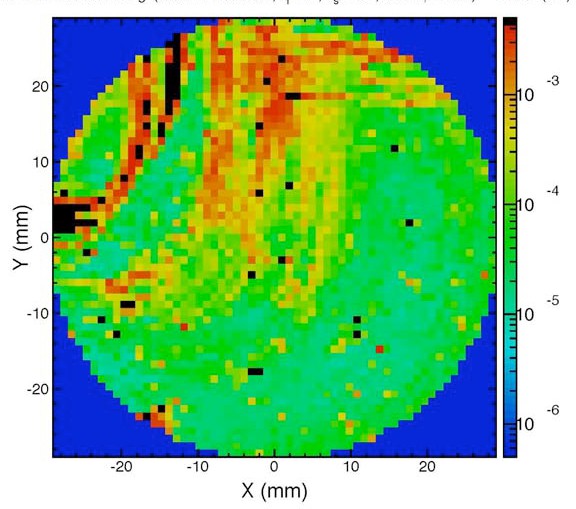
Figure 6: 610 ppm average BRDF background measurement of optic surface before cleaning
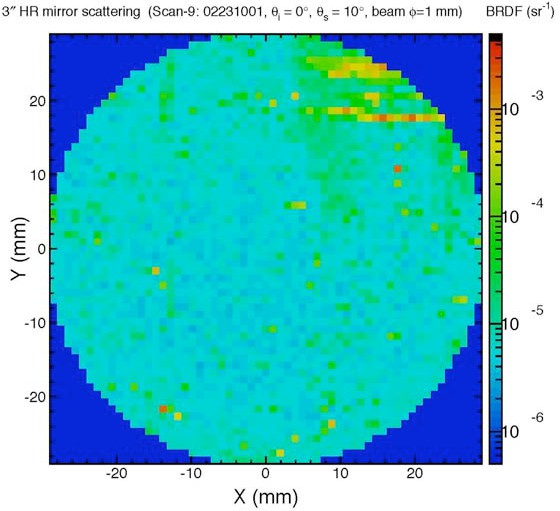
Figure 7: 20.1 ppm average BRDF after eight consecutive first contact cleanings.
9 Conclusions
Using these scatterometer graphs and corresponding average BRDF count as a general measure of cleanliness, First Contact performs better than drag wiping with clean or dirty methanol. First Contact also has the added advantage of being able to keep the optic clean and protected during transportation and installation, since the dried film can be left on the surface for long periods of time. Since methanol dissolves FC, and drag wiping an optic that has some FC on it results in residue it is advised not to use methanol to clean an optic that has been cleaned several times with First Contact. Using First Contact without any methanol drag wipe works best to keep the optic clean and also to clean a dirty optic.
|
|
|